Quilt Patterns by Joni Gaines: Modern, Beginner-Friendly Designs Made to Build Your Confidence
Patterns Made to Be Finished
If you’re here, you’re ready to make your next quilt.
I know how that goes. There are thousands of beautiful patterns out there, and the cover photos are all gorgeous. But a pretty photo can’t tell you the thing you really want to know, which is whether the pattern will still make sense when it’s just you, your machine, and a pile of cut fabric at the end of a long day.
That’s the part I design for.
Every pattern I make is built for clarity at the table, not just curb appeal in the photo. The beautiful quilt on the cover is the easy part. Instructions you can actually follow, all the way to a finished quilt you’re proud of, that’s the part I care about most.
Here’s what that looks like. Every pattern is sewn and tested by real quilters before it ever launches. Every set of instructions is professionally edited, so you’re never left guessing what a step means. Every step comes with a process graphic, not just a block of text. And most patterns come in multiple sizes, so you can make the one that fits your life.
I design this way because I remember the other way. I remember getting stuck on a pattern and being sure the problem was me. It wasn’t me. A good pattern should carry you through, and that’s what I set out to write every single time.
So I make the pattern I wish I’d had back then.
How to Choose the Right Quilt Pattern
The best pattern for you isn’t the fanciest one or the one with the most likes. It’s the one you’ll actually finish. Before you buy any pattern, from me or from anyone, ask yourself four quick questions.
What’s your honest skill level?
And by honest, I mean give yourself credit. Most quilters call themselves a beginner long after they’ve earned more. If you’ve finished a couple of quilts, sewn a decent quarter-inch seam, and matched a few points, you’re further along than you think. So count what your hands can actually do, not the smallest version of yourself. Picking a pattern that meets you where you truly are is the difference between a project that stretches you just enough and one that bores you before you finish. If you’re not sure where you land, my quilt pattern skill levels guide walks you through it.
How much time do you want to spend on one project?
Let’s be honest, most of us have a handful of works in progress, or WIPs, already parked around the studio. So the real question isn’t how much time you have, it’s what kind of project you’re in the mood for. Do you want something bigger and more involved, the kind you pull out and put away over a few months? Or are you itching to finish and move on to the next one, so quick and satisfying wins the day? Both are the right answer. Just pick the pace that matches your mood, and the quilt gets made.
Is quilt size a contributing or a limiting factor?
Sometimes size makes the decision for you. If you want or need a baby quilt for a shower next month, you need a pattern that comes in that size. Other times size is wide open. If you want to try a new-to-you size just to see if you can, go ahead and roll the dice. And if you want the finished quilt to serve a real purpose, a throw for the couch, a quilt for your own bed, let that guide you to the right one. One thing though. If you’re steering away from the bigger sizes because you don’t think you can quilt them on the machine you already own, nope. Any quilter can quilt any quilt on any sewing machine, and my free motion quilting guide is here to prove that theory wrong.
Does it excite you?
If the first three questions leave you with a couple of good options, this is the one that breaks the tie, and honestly it might be the most important of the four. You’re going to spend real hours with this quilt, cutting it, piecing it, quilting it, and then living with it long after. So pick the one you love looking at. Excitement is what pulls you back to the machine on a busy week, and it’s the quiet reason a quilt gets finished instead of folded into the WIP pile. When a pattern makes you a little giddy, listen to that. That’s your answer.
Run through those four questions and you’ll land on a pattern that fits the quilter you are right now, not the one you think you should be. That’s the whole trick. The best pattern isn’t the hardest or the fanciest. It’s the one that matches your skill, your mood, your size, and your heart, so it becomes a finished quilt instead of a good intention.
And if you’re brand new, before you’ve made a single quilt, start with my Learn to Quilt guide and come back here when you’re ready to choose. I’ll be right here.
Quilt Patterns by Skill Level
Here’s something you should know about me before you shop. I design for the quilter who’s still building her confidence. The beginner. The confident beginner. The one who wants a beautiful finished quilt and a pattern that never makes her feel like she should already know something. That’s the whole point of For the Love of Thread, and it’s where my patterns live.
Beginner
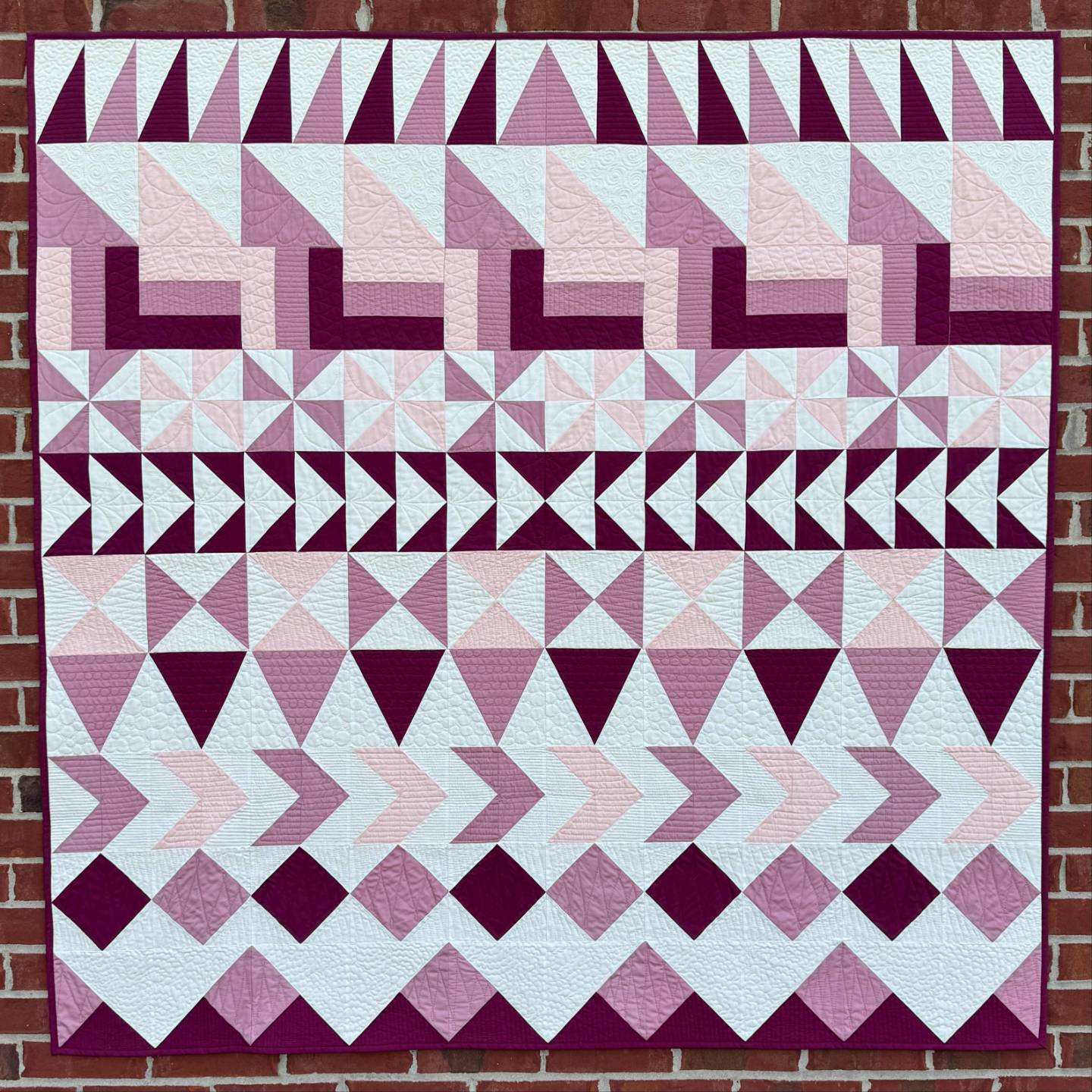
You’re brand new, or close to it, and you’re learning the fundamentals as you go. This is home base for the Skill Builder Quilt Along, or QAL, my 10-week guided experience where we make a quilt together one block at a time, with a video for every step. It’s the gentlest possible on-ramp, and you’re never doing it alone.
Confident Beginner
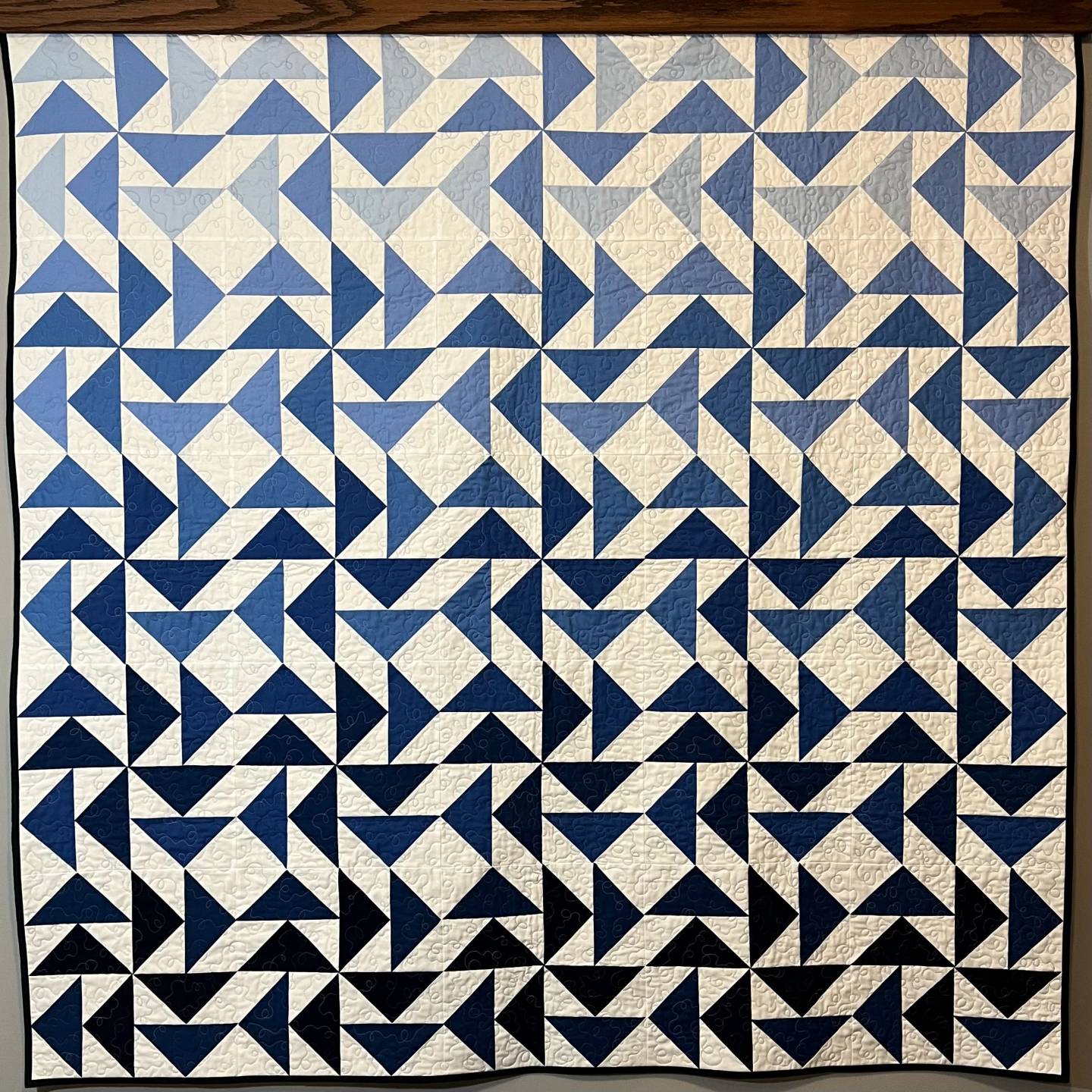
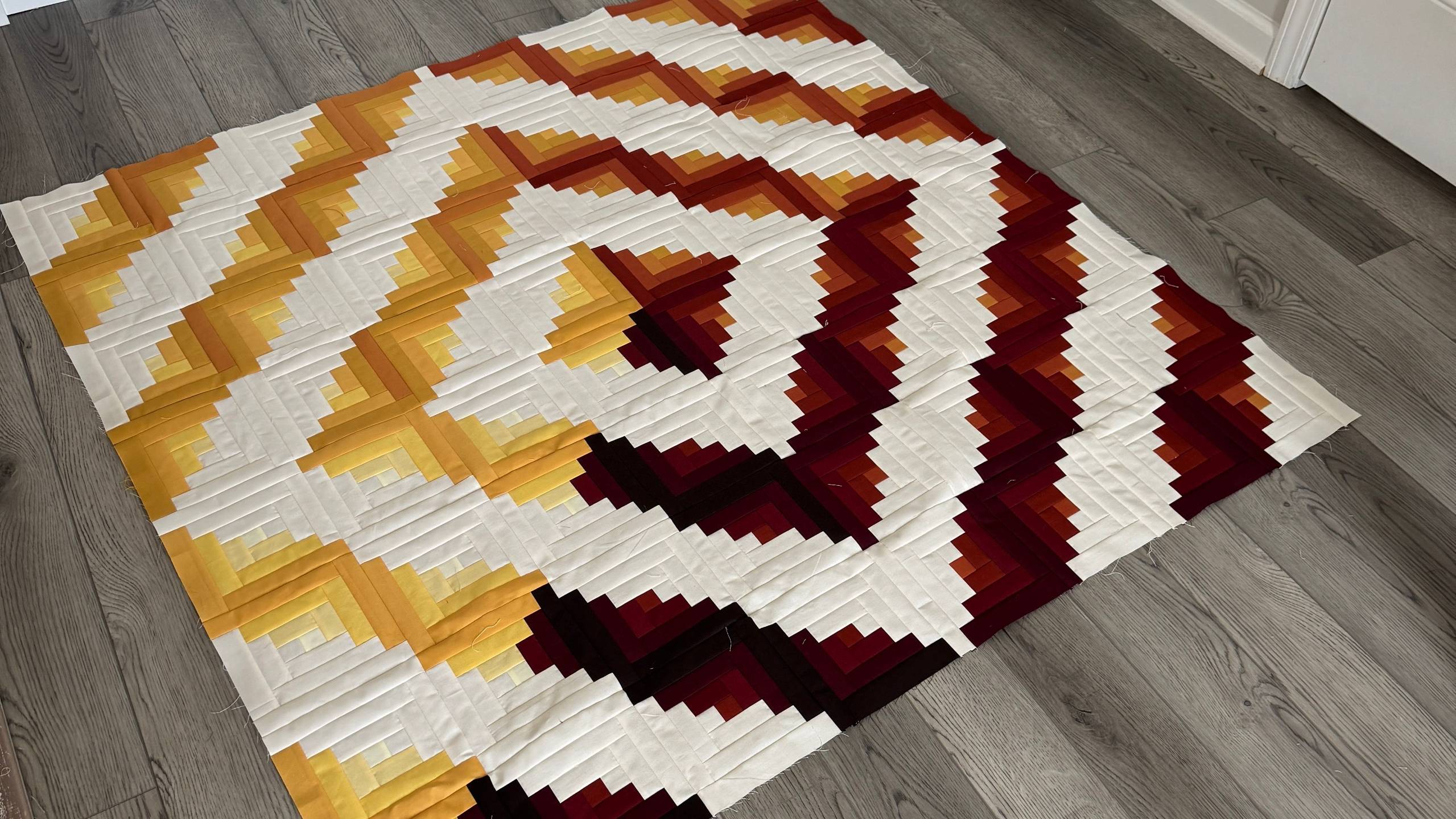
You’ve got a finished quilt or two behind you, a quarter-inch seam you trust, and you’re ready to reach a little further. The Holland Quilt and Sawtooth Splendor both live here. Both build their design from flying geese, those little triangle units that point like a goose in flight, using a no-waste, four-at-a-time method that makes four units at once with no leftover scraps. It might be a new technique for you. I promise you’ll love it by the last block. Holland adds one more layer of fun. It’s designed in ombre, where the color shades gently from light to dark across the quilt, so you get the challenge of playing with color while you build your quilting skills.
Now, you won’t find a long list of intermediate and advanced patterns on this page, and that’s a choice, not a gap. I’d rather write the clearest beginner and confident-beginner patterns in the business than chase difficulty for its own sake. And here’s the quiet secret about a truly clear pattern. It’s a pleasure for an experienced quilter too. If you’ve been at this for years, you’re just as welcome here. My patterns make for a relaxing, no-guesswork afternoon at the machine, the kind you can piece on a busy week without stopping to decode a single confusing step.
Quilt Patterns by Technique
Another way to find your next quilt is by the skill you want to practice. Same patterns, sorted a different way. If there’s a technique you’ve been itching to try, start here.
Patchwork Piecing
This is classic quilt making, cutting fabric into shapes and sewing them back together into blocks. It’s where you build the pieces you’ll reach for again and again, like half-square triangles, two triangles joined into one square, and flying geese. Most of my patterns live here. Holland, Sawtooth Splendor, Poinsettia, and School Spirit are all pieced this way. If you want a strong, versatile foundation, this is your shelf.
Foundation Paper Piecing
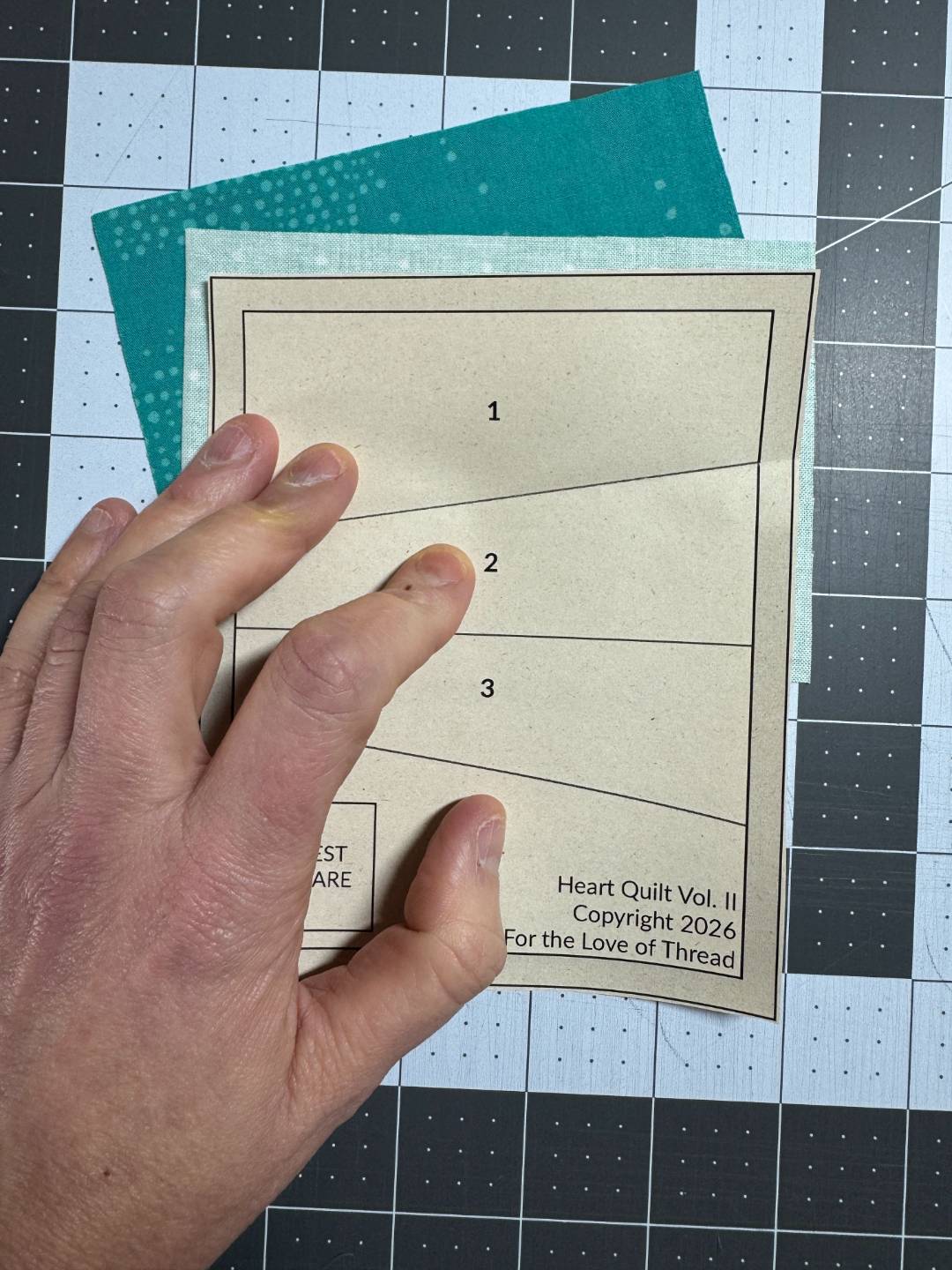
Foundation paper piecing, or FPP, means sewing your fabric right onto a printed paper pattern, stitching along the lines. It feels a little backward at first, and then it clicks, and suddenly you’re getting crisp points and intricate designs that are genuinely hard to pull off any other way. Heart Quilt Vol. I is my fully paper-pieced pattern.
Love & Thread mixes a little paper piecing in with regular patchwork, so it’s a gentle place to try the technique without committing to a whole quilt of it. You'll also find a link in the pattern to a video of me making the FPP spool block from start to finish.
Block of the Month
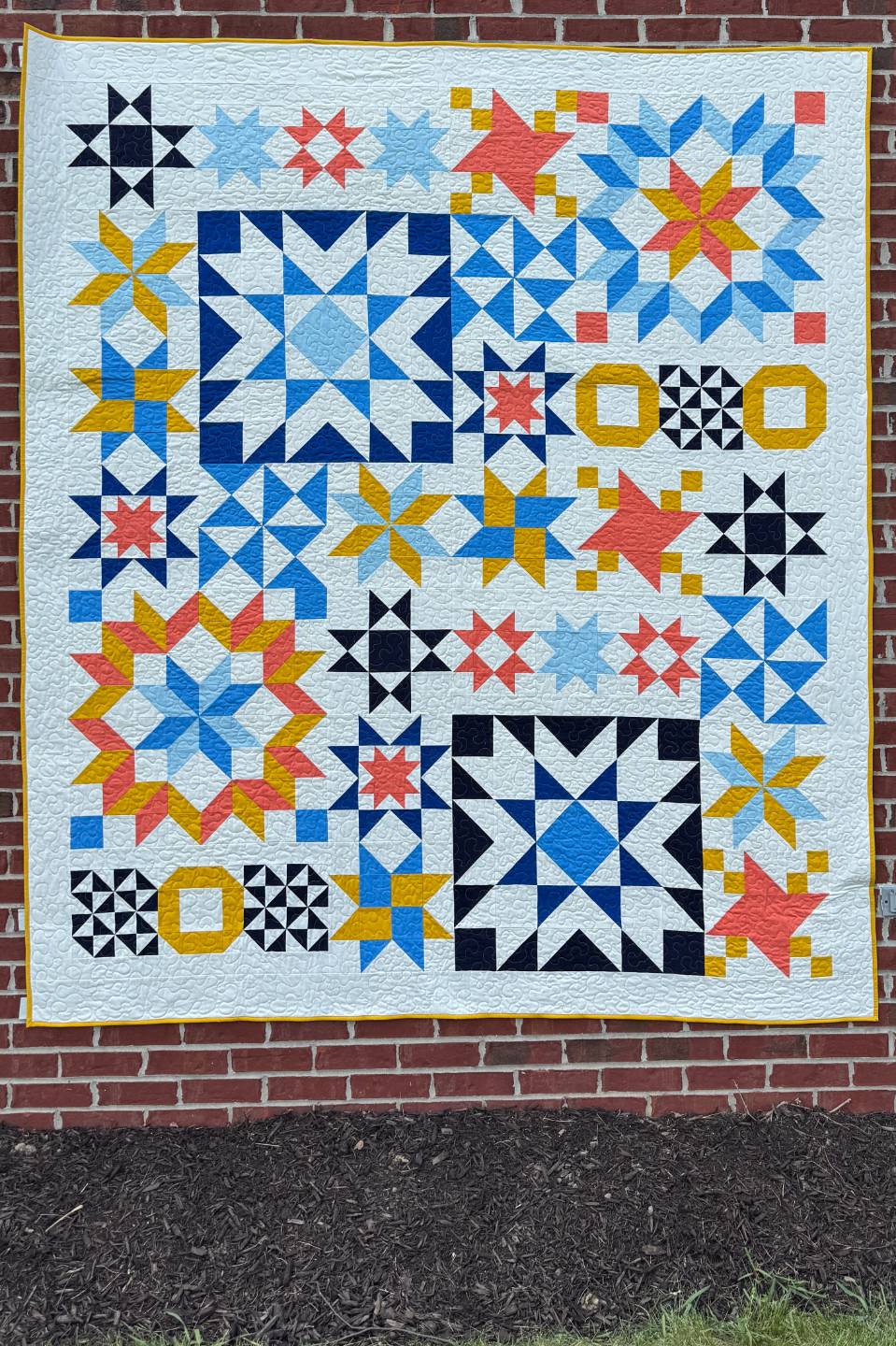
A block of the month spreads one quilt across a series of blocks you make over time, so a big project stays bite-sized and never overwhelming. Star Rise is built exactly this way.
And if piecing the top feels like the fun part but quilting it feels like the scary part, well, that’s the most common worry in quilting. My free motion quilting guide is your next stop.
How I Design My Quilt Patterns
A pattern is more than a pretty cover photo and a cutting chart. It’s a promise that if you follow it, you’ll get where it says you’re going. So here’s how mine actually get made, from first sketch to finished quilt.
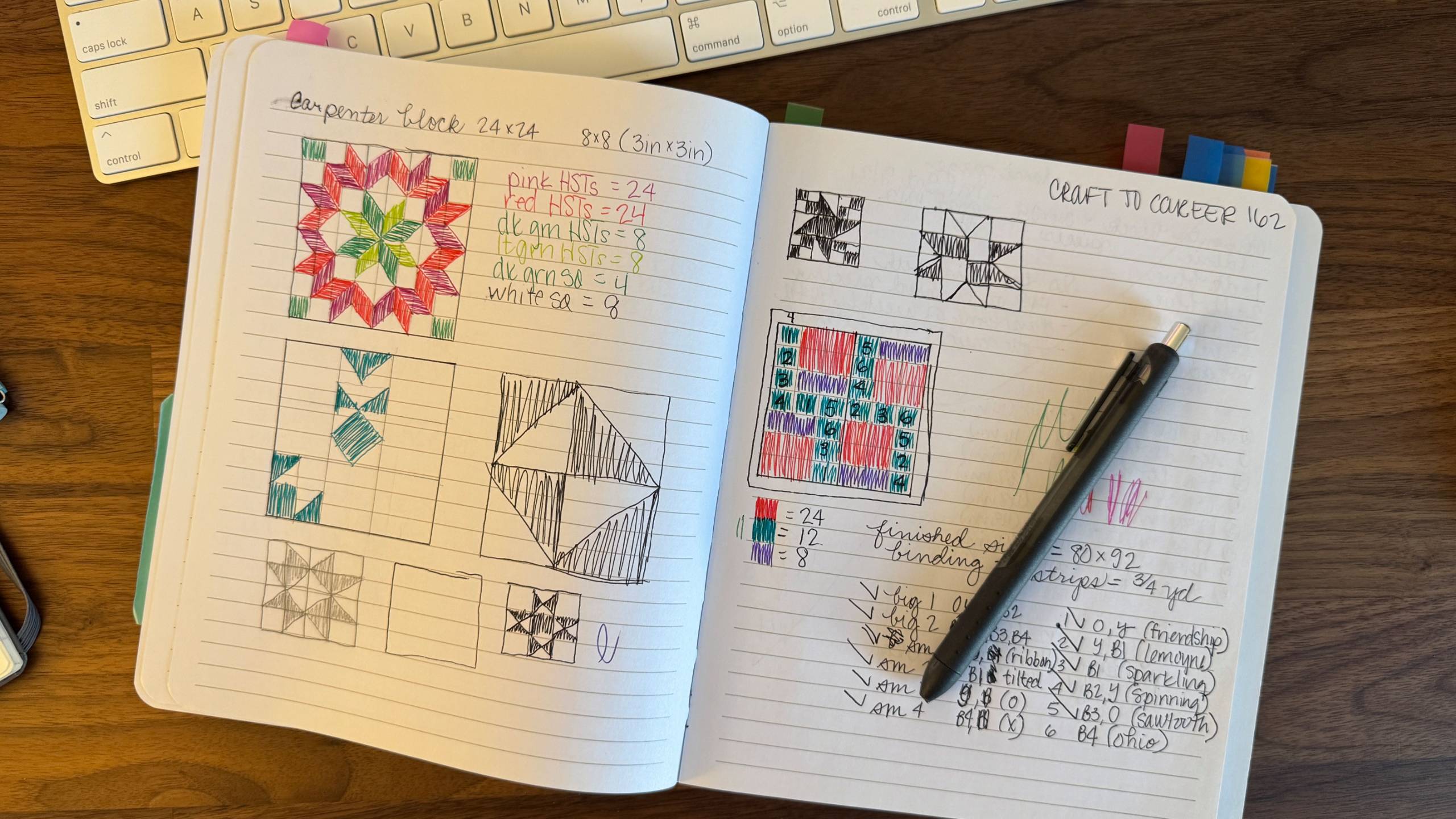
Every pattern moves through the same steps. I design the quilt, sketching and shifting blocks around until the whole thing feels right. I calculate every number, the yardage, the cutting, the math that has to be exact so your pieces fit. I write the instructions in plain language, one clear step at a time. And then I put the whole thing to the test.
That word tested isn’t decoration, so let me show you what it actually means. First I make the cover quilt myself, following my own directions exactly as they’re written. The second something doesn’t work, I know a step needs rewriting or the math needs another look. Then it goes to my pattern tester, who happens to be both a quilter and an engineer, so trust me, she works that calculator hard double-checking every number. From there it goes to a professional editor, because clear in my head isn’t the same as clear on the page. And last, I hand it to a few of my quilty friends to make, because fresh eyes catch the things I’ve stopped being able to see. Only then do I photograph the finished quilt and call the pattern ready.
One more quiet promise. The fabric requirements are figured with a real margin, so you’re never standing at the cutting table three yards short of a finished quilt.
I build patterns this way for a simple reason. It’s exactly what I’d want as the person buying one. I want to trust that the designer already walked the whole path, hit the confusing parts, and smoothed them out before I ever sat down. That’s the pattern I try to hand you every time.
Want the longer version? I wrote out my full pattern design process on the blog.
Choosing Fabric for Your Quilt
I’ll tell you the step that freezes more beginners than any other, and it isn’t a tricky seam or a scary block. It’s standing there, pattern in hand, completely unable to choose fabric. So many gorgeous options, so many ways it could go wrong, and the whole project stalls before a single piece is cut.
Let me take some of that pressure off. Choosing fabric really comes down to two questions.
First, do you love looking at it? That sounds too simple to matter, but it’s the whole game. You’re going to spend hours with this fabric. If it makes you happy every time you glance at it, you’ve already gotten the most important part right.
Second, is there enough value contrast? Value is just how light or dark a fabric is, and contrast is the gap between them. It’s what lets your design actually show up instead of melting into one soft, pretty blur. Here’s a quick test. Snap a black-and-white photo of your fabrics laid out together. If you can still tell the lights from the darks in gray scale, your quilt will have the pop it needs.
Seamus was so excited about this 11-step gradient that he had to photobomb my work. He takes the quality control part of his role as our CEO very seriously.
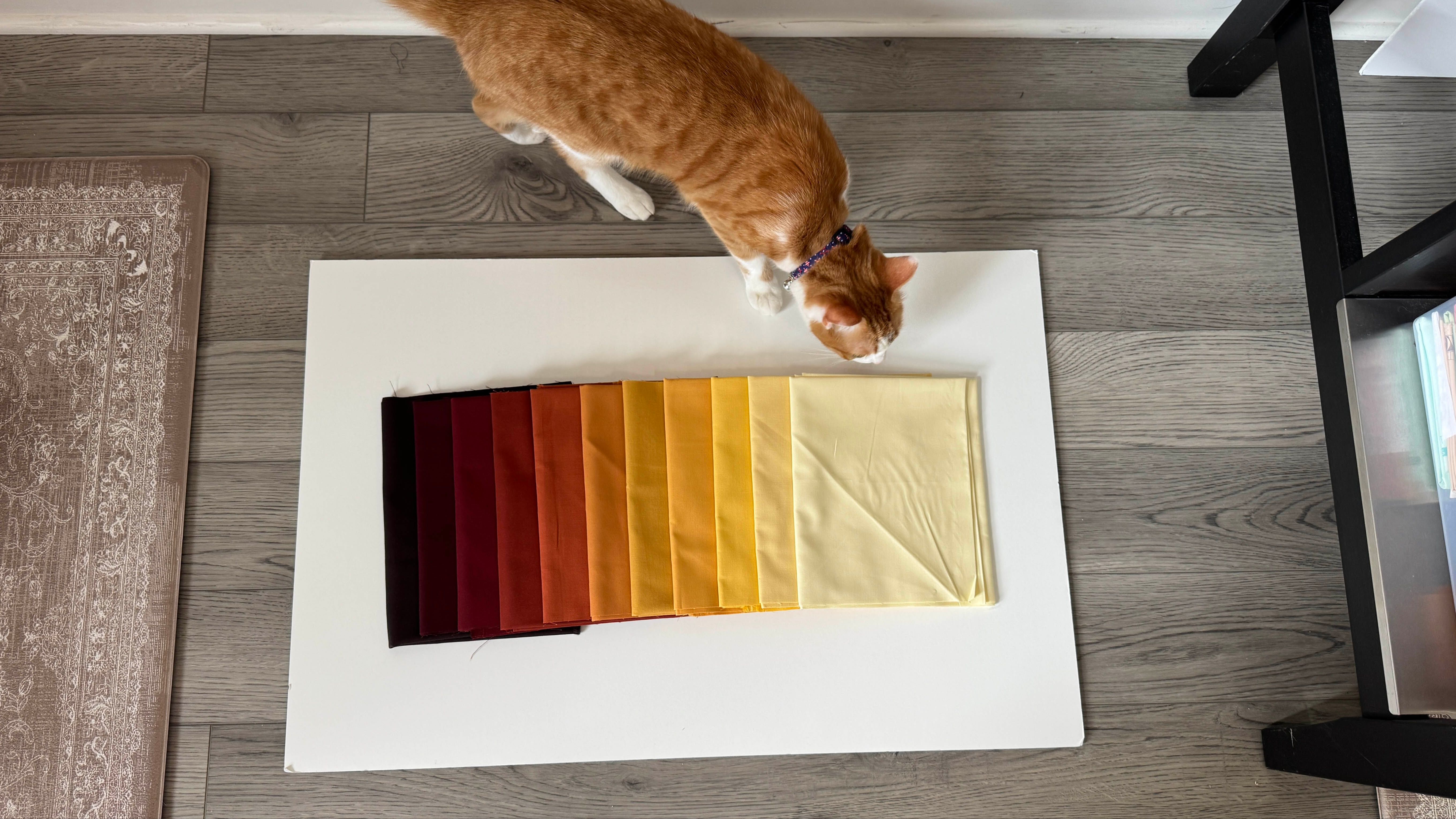
Now the tip that makes the whole thing click. If you like to use prints, start with one print you love. This will be your focal fabric, the star of the quilt. Then pick the group of fabrics that goes with it, your fabric pull, to support that star rather than compete with it. Building around one anchor is so much easier than trying to assemble a dozen equals.
And if your first fabric pull feels like a wobble, that’s completely normal. Choosing fabric is a skill like any other, and your second quilt’s fabrics will come easier than your first. I promise.
Once your fabric is chosen, one more question tends to come up. Do you wash it first? There are good reasons to go either way, and I break down the whole to-prewash-or-not debate in my prewashing your fabric post so you can decide what’s right for your quilt.
Want to go deeper on color? My Color 101 post walks through it, and if you’re brand new to all of this, the Learn to Quilt guide covers supplies and setup too.
What You Get When You Buy One of My Patterns
By now you know how much care goes into each pattern before it ever reaches you. Every pattern in my shop is a digital PDF, delivered to your inbox the moment you buy. Here’s what’s inside each one.
What’s in Every Pattern
- A complete fabric requirements chart for each size the pattern comes in.
- A cutting chart with fabric labels and clear directions, so you're never guessing what to cut from where.
- Step-by-step directions written in plain language and broken into small, doable steps.
- A process graphic for every step, so you can match what's on your cutting table or machine to the picture and know you're on the right track.
- Professionally edited instructions, so the language stays clear and consistent the whole way through.
- A printable coloring sheet, so you can audition colors before you cut, then use the same sheet to map out your quilting plan when it's time for that step.
- Instructions for binding your quilt, the fabric edge that finishes it.
If a pattern calls for printed templates, those are included too, along with directions for printing them at the exact size you need.
Every pattern is built so you can sit down and start. No guessing what a sentence means. No re-reading a step three times to figure out where you are.
What You’ll Need on Your End
- A printer for the pattern, or a tablet if you'd rather read from a screen.
- Standard quilting supplies. If you're brand new and not sure what those are, the Learn to Quilt guide walks through the full list.
That’s the whole package. Buy it, download it, sit down at your machine, and start.
My Favorites
Picking favorites feels a little like ranking my kids in order of who I love best. But I'll be honest, I do have a few in my shop. Here's why I love them so much.
Love & Thread
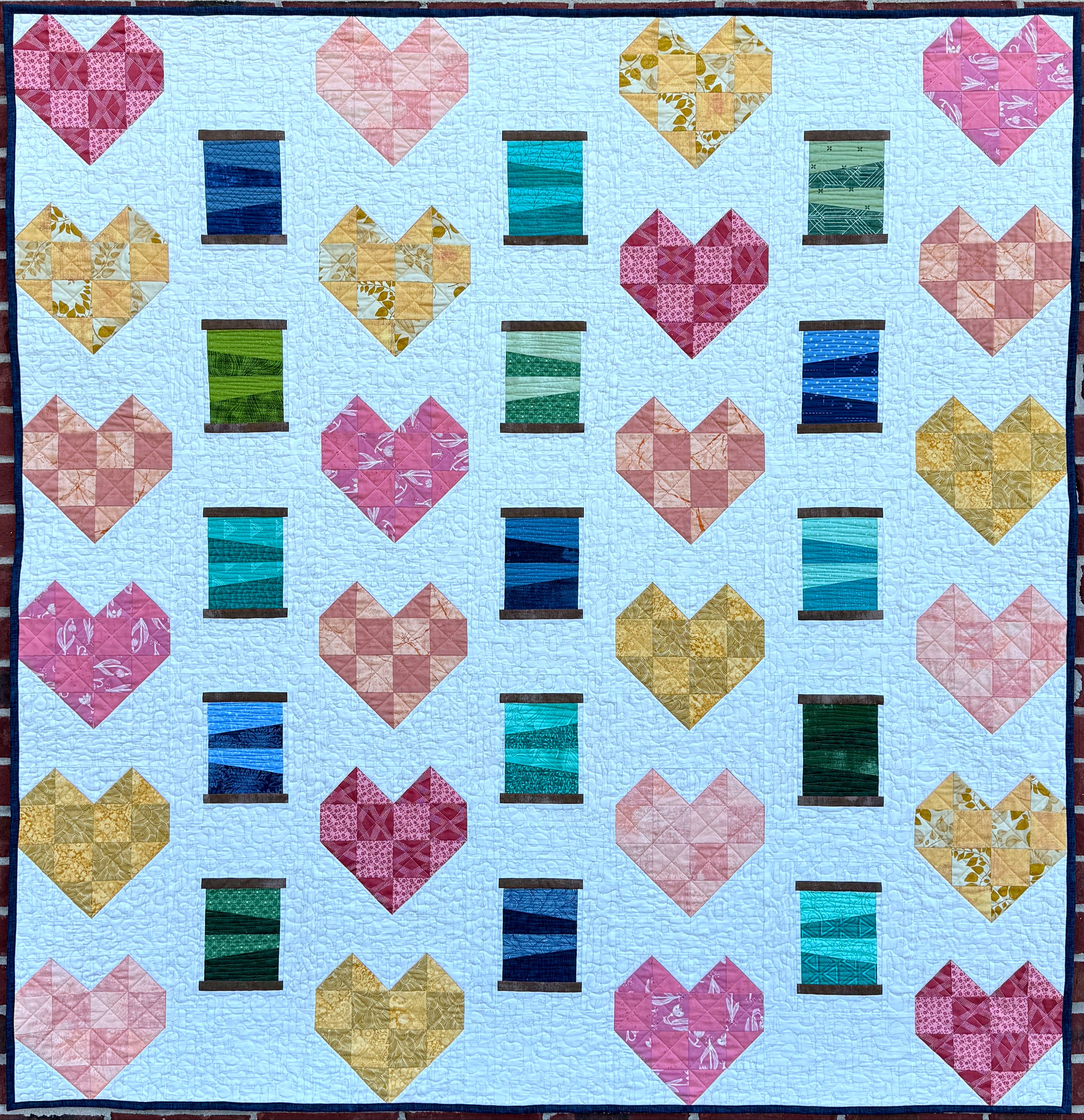
If one pattern is the definition of my business in quilt form, it’s this one. Scrappy heart blocks and thread spools are perfect for creating something that embodies our love of this craft. It’s friendly for beginners, it works beautifully from your own stash instead of a cart full of new fabric, and it has just a touch of gentle foundation paper piecing to stretch you. If you start anywhere, start here.
Skill level: Beginner
Sizes: Throw
Holland
The very first pattern I ever released, and still one I’m proud to show off. I had a full-on crush on ombre when I made the cover quilt, that gentle shift from light to dark across the fabric, and you can see it in every row. Flying geese, ombre color play, all the charm.
Skill level: Confident beginner
Sizes: Baby and throw
Heart Quilt Vol. I
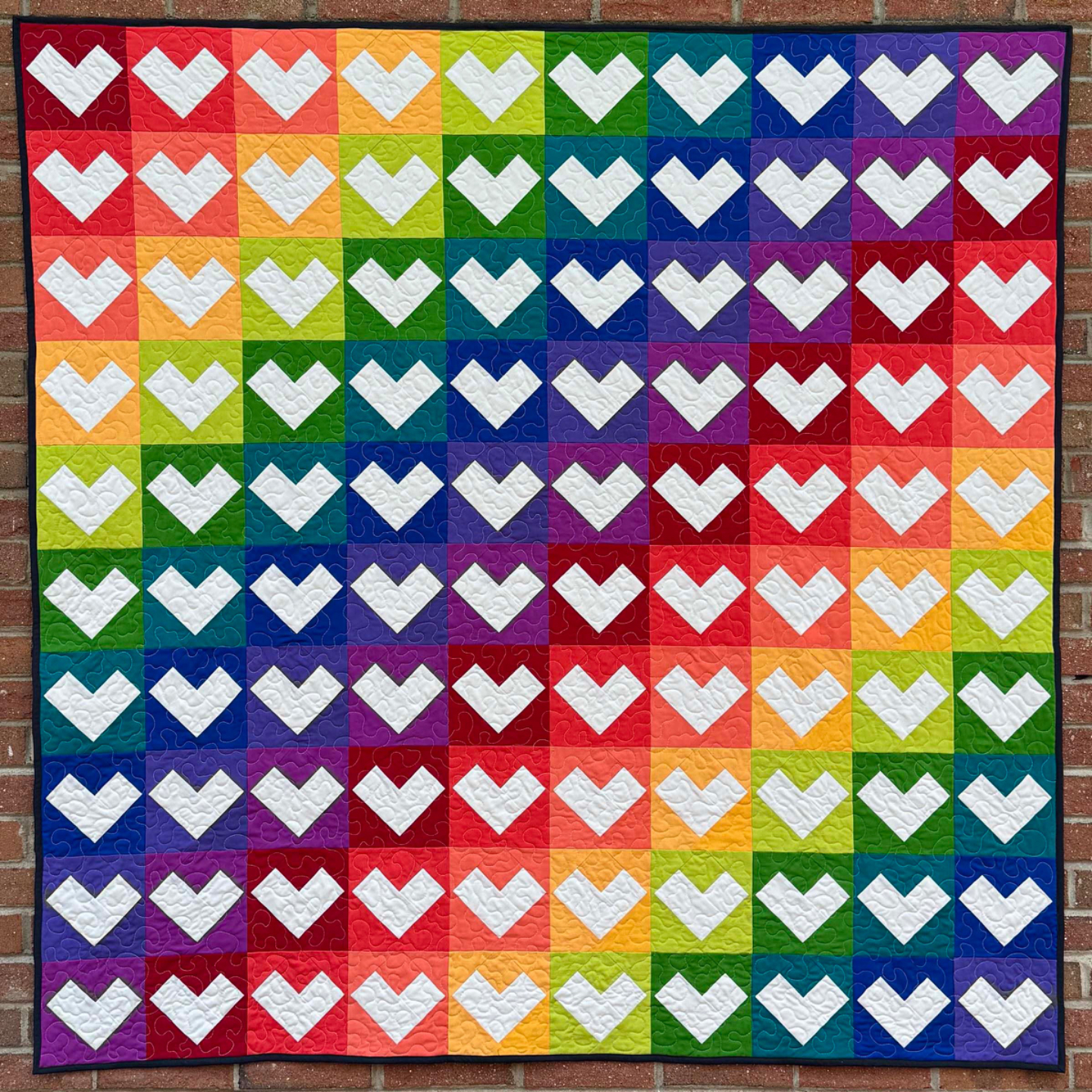
This one holds a soft spot in my heart, and yes, I hear myself. I released it on For the Love of Thread’s birthday last year as the first in a heart quilt series, and it was my first foundation paper piecing pattern too. If you’ve been wanting to try paper piecing, it’s a sweet place to begin.
Skill level: Confident beginner
Sizes: Baby, throw, table runner, and pillow
School Spirit
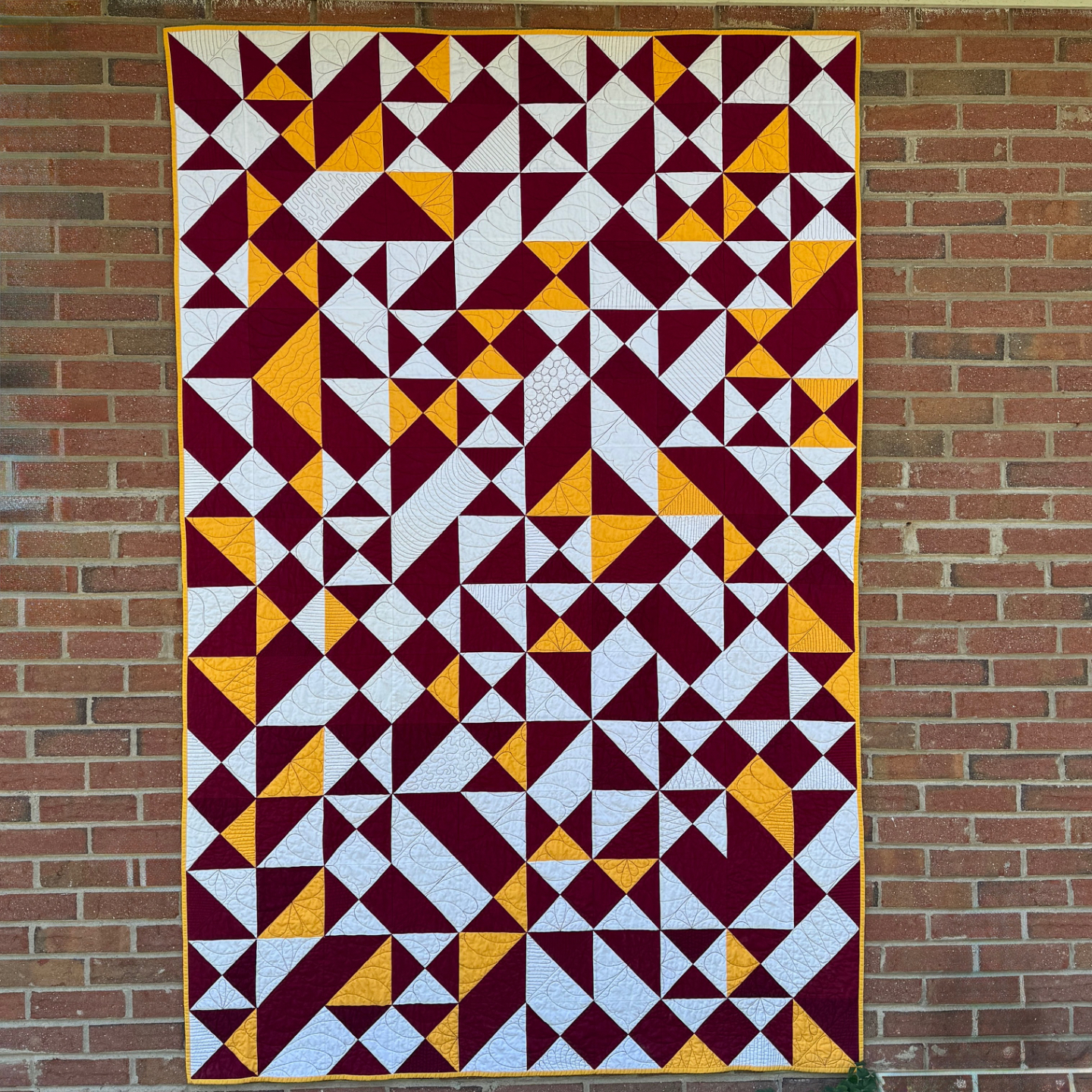
I made this one for my oldest niece's high school graduation last year. When I shared it, people loved the story, and they loved the idea of a Twin XL quilt they could make in their own graduate's school colors. Each block uses the two-at-a-time half-square triangle piecing method, and it comes together quickly.
Skill level: Confident beginner
Sizes: Twin XL, made to fit a US dorm bed
Those are four of my favorites, not the whole family. You can see every pattern over in the shop.
And to answer the question at the top of this section: Seamus. He's my favorite because he'll never move to California for college and forget to come home like E did, and he won't grab the end of the toilet paper roll and throw himself a ticker tape parade like Gilderoy did.
What's Coming Next
If you like to know what’s around the corner, here’s a peek.
I have one more pattern coming in 2026. Harvest Light lands around mid-September. It looks intricate, but the whole secret is color placement, not fancy piecing. It comes with extra charts and maps so you can get every color exactly right, and yes, there’s ombre in it, because apparently I still have that crush.
Then on Black Friday, I’m opening the doors to something I can’t wait to share. The COLOR CO/OP is a color club that meets every month to take the mystery out of color, which is one of the things quilters tell me trips them up most. It’s packed with bonuses, and the waitlist is open right now.
Hop on the waitlist and three good things happen. You get my brand-new guide of 10 done-for-you color palettes right away, ready to use in your next quilt. You get first access when the doors open on Black Friday. And you lock in the founding member rate, the lowest it will ever be, for as long as you stay. Join the waitlist, grab your palettes, and I’ll see you on Black Friday.
Join the Wait List
Get 10 done-for-you color palettes you can use for your next quilt now. Get early access to The COLOR CO/OP when it opens in November.
Looking into 2027, I have a lot brewing. Another Skill Builder event. A summer sew along. A cheeky Halloween block of the week. And a cozy winter pattern made for fireside snuggles and a mug of hot cocoa.
The surest way to catch every launch, and every founding-member deal, is to be on my email list.
Frequently Asked Questions
Are your patterns beginner-friendly?
What format are your patterns?
Do I need a special printer to print your patterns?
Can I use different fabrics or colors than what's shown?
How long does it take to make one of your quilts?
Are foundation paper piecing patterns harder than regular piecing?
Do you offer kits, or just patterns?
What if I get stuck while making one of your quilts?
Can I sell quilts I make from your patterns?
Can I share or resell the PDF?
Find the One You'll Finish
Here’s what I hope you take from all of this. The best quilt pattern isn’t the fanciest one or the one with the most likes. It’s the one you’ll actually finish, the one that meets your hands where they are today and carries you all the way to a quilt you’re proud of. Every pattern I make is built to be exactly that.
So wherever you are, brand new or a dozen quilts in, there’s a place to start. Look around the shop and find the one that makes you a little giddy.
I can’t wait to see what you make.