You're standing in front of the thread wall at your local quilt shop, and one spool jumps out at you. Sunset orange melting into hot pink, then violet, then a deep teal. It's gorgeous on the spool. You can already see it swirling across your next quilt, and it goes straight into your basket.
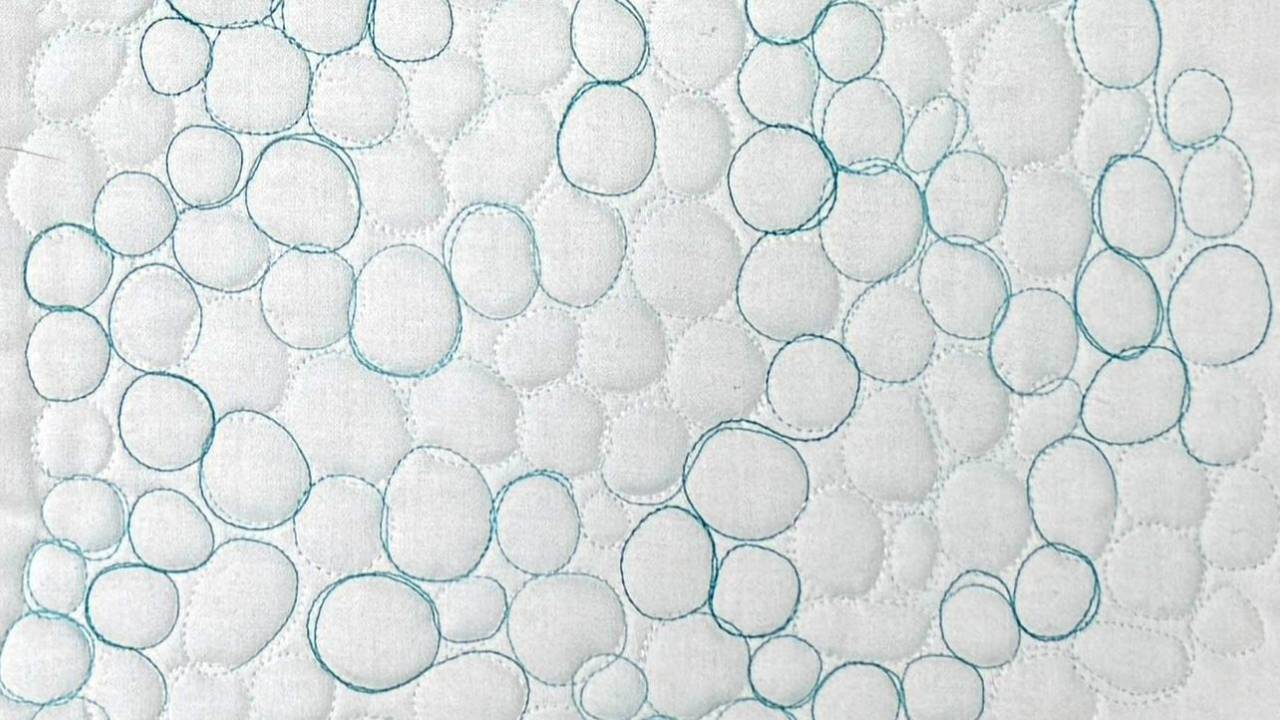
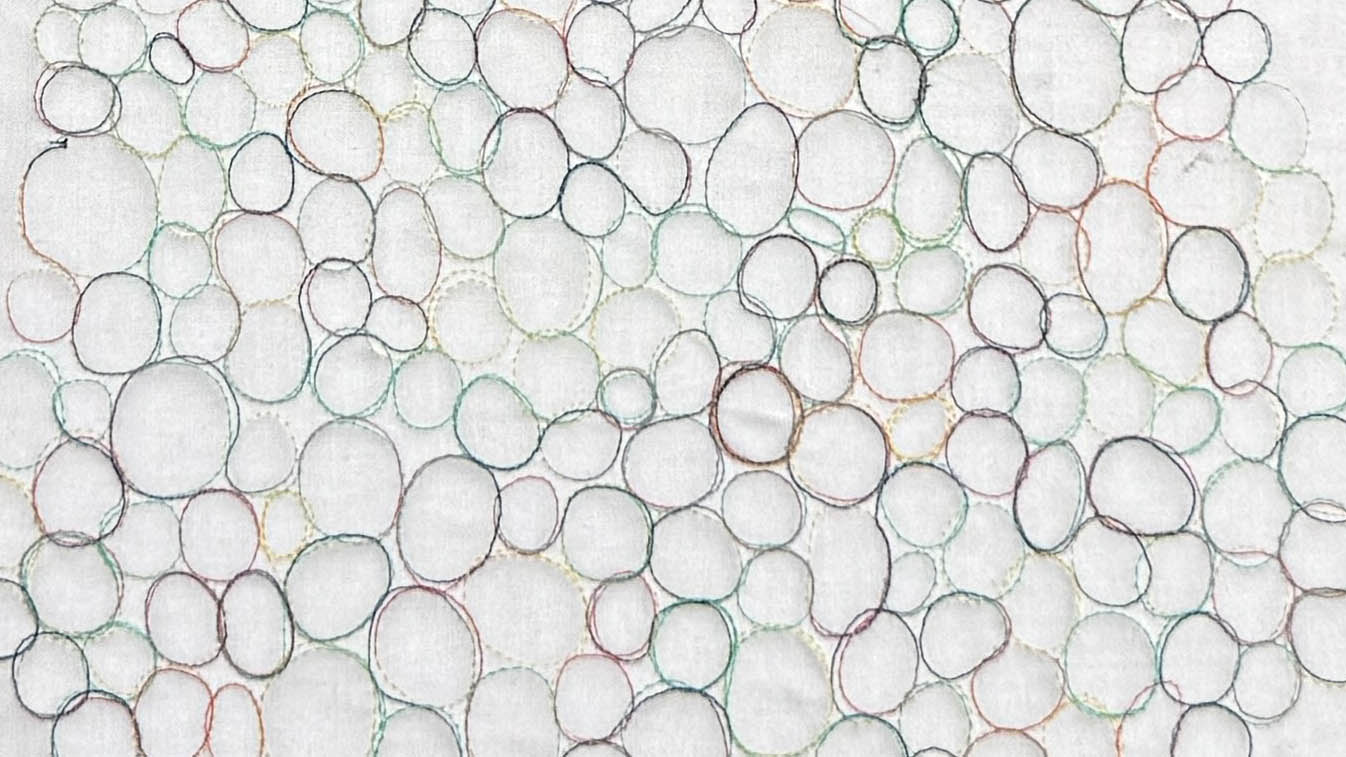
Then you get it home, stitch a row of pebbles, and lean in for a closer look. The quilting looks dingy. Not bright. Not sunset. Kind of brown.
The thread isn't bad. The design did something the spool couldn't warn you about.
Why Variegated Thread Turns Muddy
Variegated thread changes color along its length. On a single line of stitching, that's pure fun. You get a little ribbon of color shifting as you quilt.
Free motion quilting doesn't always stay on a single line, though. Plenty of designs retrace, which means you stitch right back over a line you already stitched. When that happens, one section of the thread lands on top of another.
If those two sections are close cousins on the color wheel, they blend and the design glows. If they're opposites, like orange over blue or red over green, your eye mixes them together. Opposites mixed together make brown and gray. That's the mud.
Tip 1: Pick a Spool That's All Warm or All Cool
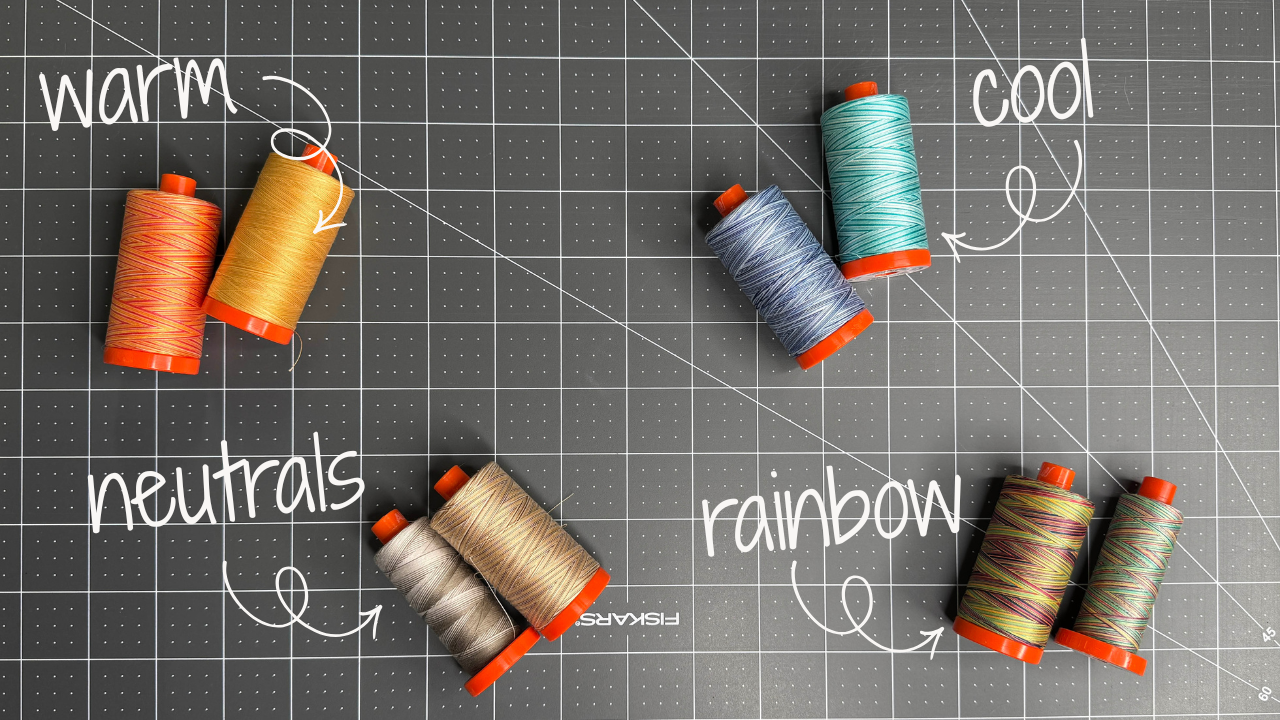
The easiest way to stay out of the mud is to choose a variegated thread that lives on one side of the color wheel. Reds, oranges, and yellows together. Or blues, greens, and purples together.
Every section of a spool like that is a neighbor to every other section. No matter which color lands on top of which, they play nice.
Neighbors that straddle the warm and cool line usually work too. A spool that drifts from yellow into a soft yellow-green is still fine, because those two sit side by side on the wheel. The trouble starts when a spool jumps all the way across it.
If warm and cool are new territory for you, my post on how color temperature changes the feel of your quilt walks through the basics.
Tip 2: Know Which Designs Retrace
Not every design doubles back. A meander wanders across the quilt without ever stitching over itself, so a mixed spool can get away with a lot there.
These designs retrace, and they're where your thread choice matters most:
- Pebbles
- Leaves
- Paisley
- Ginkgo leaves
Don't forget about travel stitching. Sometimes the cleanest way to get from one part of the quilt to another is right over a design you already quilted. That's retracing too, even if the design itself never calls for it.
Before you commit to a mixed spool, pull out your quilt plan and look at how often you'll be stitching over your own lines.
Tip 3: Watch the Value Changes
Color isn't the only thing shifting on a variegated spool. Value shifts too, from light to dark.
Put that spool on a medium-value fabric, and the light sections can disappear into the background while the dark sections pop right off it. Your design fades in and out as it travels across the quilt.
Sometimes that's a beautiful effect. Sometimes it looks like you ran out of thread halfway through a leaf. Decide which one you want before the needle goes down. Lay a strand of thread across your fabric and snap a black-and-white photo with your phone. You'll see right away which sections blend and which ones jump.
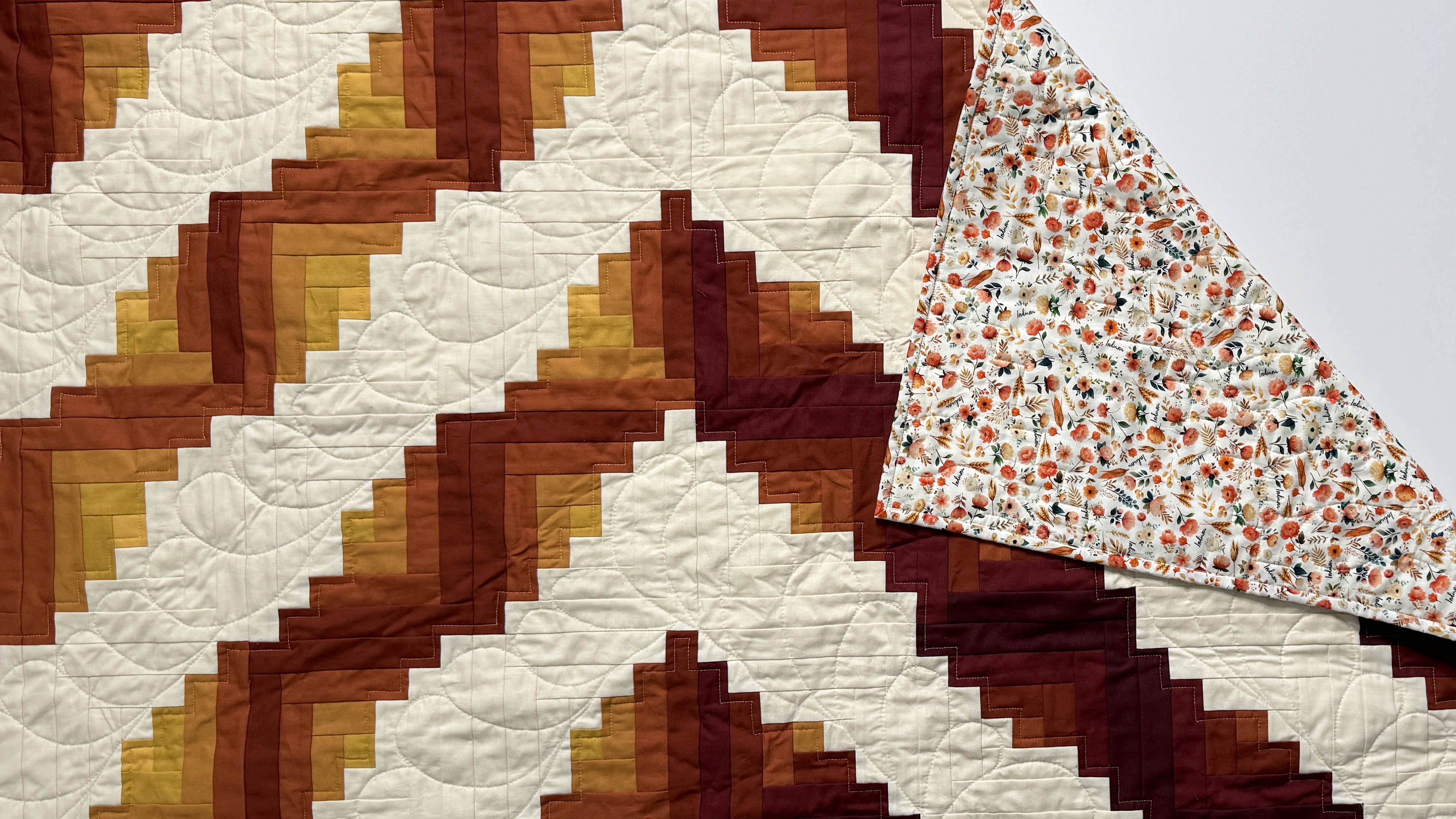
I used yellow variegated thread to outline quilt the ombre rows in Harvest Light. You can really see it pop on the darker colors, but it fades away in the lighter colors.
Tip 4: Check the Length of the Color Repeats
Every variegated thread has its own rhythm. Some change color every few inches. Others hold one color for a long stretch before shifting to the next.
Short repeats give you a speckled look, with a little of every color in every design. Long repeats change slowly, so one leaf might be all gold and the next one amber.
Here's the tie back to retracing. With long repeats, the thread that stitches back over a line is more likely to be the same color that laid it down. Short repeats change so fast that retraced lines are more likely to stack two different colors. If your spool has short repeats and a mix of warm and cool, save it for a meander.
Unwind an arm's length of thread and lay it across your fabric to see the rhythm before you decide.
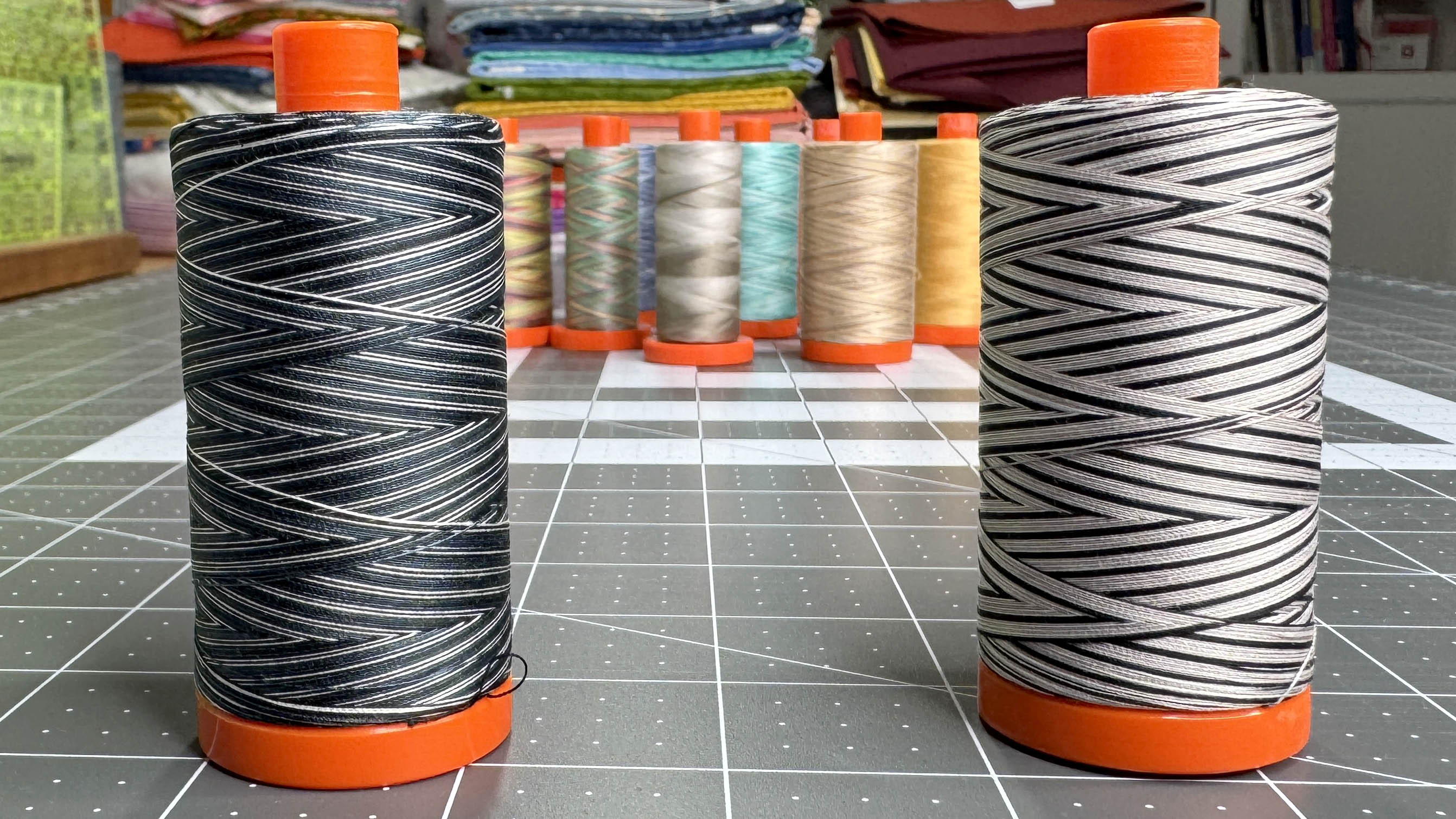
Both of these spools are black and white. However, they look very different because one favors a longer black run, and the other favors a long white run.
Tip 5: Think About Busy Prints vs. Solids
On a solid, variegated thread is the star. Every color change shows up, and so does every bit of mud.
On a busy print, the thread competes with the fabric, and a lot of the color change gets lost. That can make a mixed spool more forgiving. It can also leave you wondering why you bought the pretty thread in the first place.
If you want your thread to be seen, give it a solid or a tone-on-tone blender to shine on.
Tip 6: Test on a Practice Sandwich First
I always tell you to test on a practice sandwich before you touch the real quilt. It's the first rule in my complete guide to free motion quilting. For thread testing, there's one change. Build this sandwich from the quilt's own fabrics and batting, not the high-contrast scraps you use for everyday practice.
Use the exact thread you plan to quilt with, too. I use Aurifil 50 weight for all my piecing and quilting, so my test sandwich shows me exactly what the finished quilt will look like.
Stitch a few inches of every retracing design in your plan. Look at it up close. Then walk across the room and look again. If it reads bright from both spots, you picked a winner.
Learn More About Quilting & Color
I had a rough start with color. I once threw away a whole quilt top, about $180 of fabric, because the colors didn’t work. So I dove in and learned everything I could about color. Now I’m sharing it in The COLOR CO/OP, a color club for quilters. Each month you learn one color lesson and sew it into a block. Doors open Black Friday, and the first 100 members get a founding rate of $9 a month (regular price $12). Join the waitlist to hear first when enrollment opens.