Confession: I have a habit of treating empty background space like a personal challenge. Feathers. Pebbles. A meander that turns into a full-blown vine halfway across the quilt. If there's a blank spot on a top, I will find a reason to fill it with a free motion quilting design.
I decided to change that when I made the quilting plan for the Harvest Light quilt.
Why I Pulled Back This Time
I've noticed something in my last few finished quilts: I was overquilting them. Not badly. Not in a way anyone but me would notice. But I'd get to the machine, feel that itch to just let go at the machine, and stitch density into places that didn't need it. Some of those tops needed a break, not another feather wreath.
Harvest Light asked for something different. The piecing does the work here, and every extra design I stitch on top of it is a design competing with it instead of supporting it. So before I touched the machine this time, I made myself a rule: quilt what the top needs, not every design I know how to do.
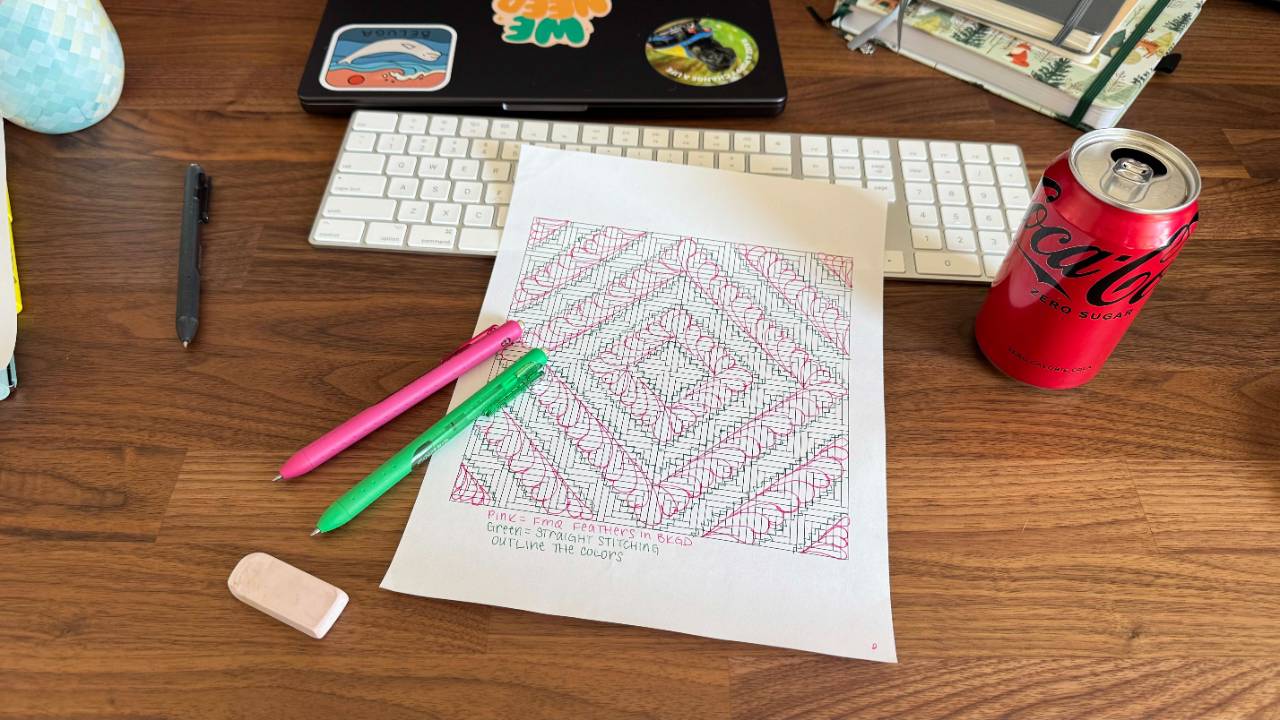
Sketching the Plan on the Coloring Sheet
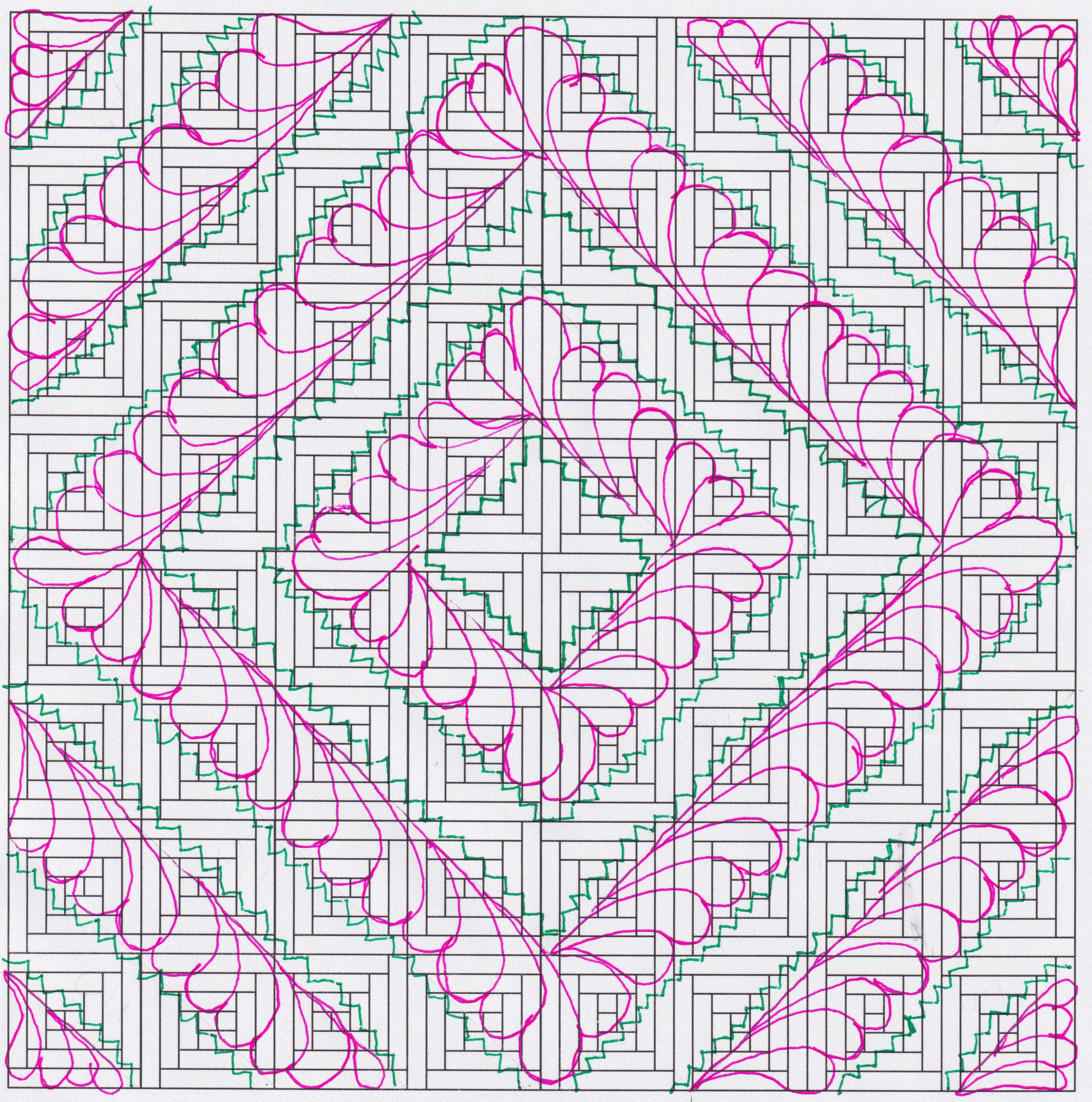
The Harvest Light pattern comes with a printable coloring sheet, meant for auditioning fabric placement before you cut a single piece. I used mine to make a quilting plan. Once my color plan was settled, I went back to a fresh copy and sketched my quilting plan directly onto it, section by section.
Seeing the whole quilt at once, instead of one block at a time under the machine, is what kept me honest. It's a lot harder to talk yourself into an extra feather wreath when the whole top is staring back at you and it's already telling you it's done.
Sketching Is Doodle Practice, Not a Detour
Here's the part I love about this process. Sitting down with my pens and the coloring sheet wasn't a planning chore to get through before the fun part. It was doodle practice. The same hand and eye coordination that gets you ready to stitch a design at the machine gets built when you trace it on paper first, low stakes, no fabric on the line.
If you've never made yourself an actual quilt plan before starting a project, What Is a Quilt Plan? walks through how and why I do it for every quilt now, not just this one. If you want to go deeper, I have a complete guide to making a quilt plan in my shop. It's 16 pages that gets you thinking about how your quilt is constructed and walks you through the entire process of making a quilt plan.
What I Landed On
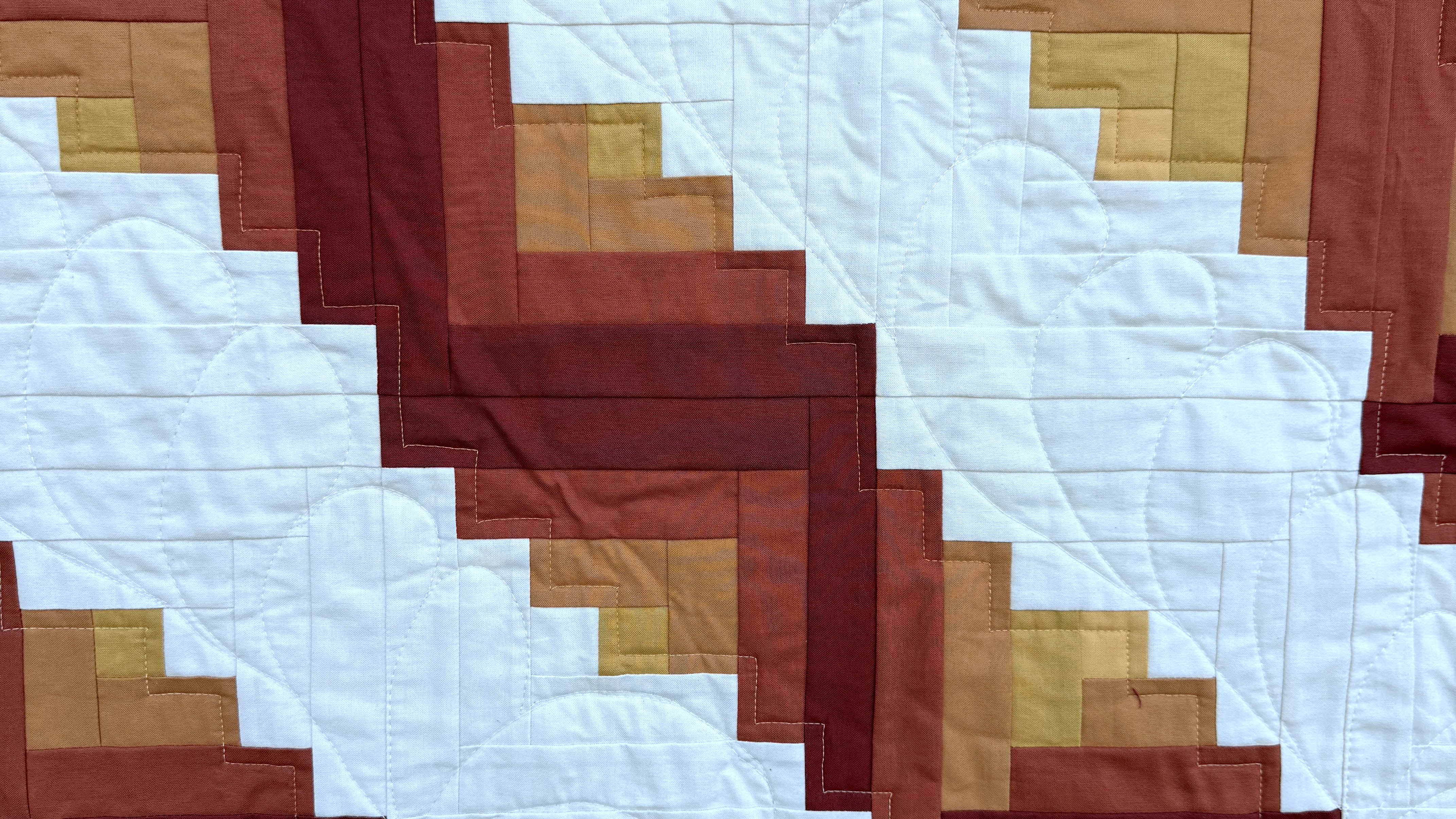
The plan I ended up with is simple on purpose: feathers filling the open background space, and straight-stitch quilting outlining the colors. It was just enough definition to hold them in place. Nothing competes with the piecing. Nothing needs to. And the finished quilt is much more cuddly than some of my other quilts.
It took me longer to convince myself that was enough than it did to actually sketch it.
Harvest Light Launches Today
This is the plan I'm using on my own Harvest Light top, and the pattern is available in my shop. If you want to make one for yourself, grab Harvest Light here. Sketch your own plan on the coloring sheet before you quilt a single stitch. Your hand will thank you for the practice.