You’ve heard of half-square triangles. But have you met their slightly more dramatic cousin?
Half-rectangle triangles, often called HRTs, work on the same basic principle as HSTs, but with one key difference: they’re made from rectangles instead of squares. That seemingly small change creates a unit with a distinct diagonal lean, and it opens up a whole new range of visual possibilities in quilt design.
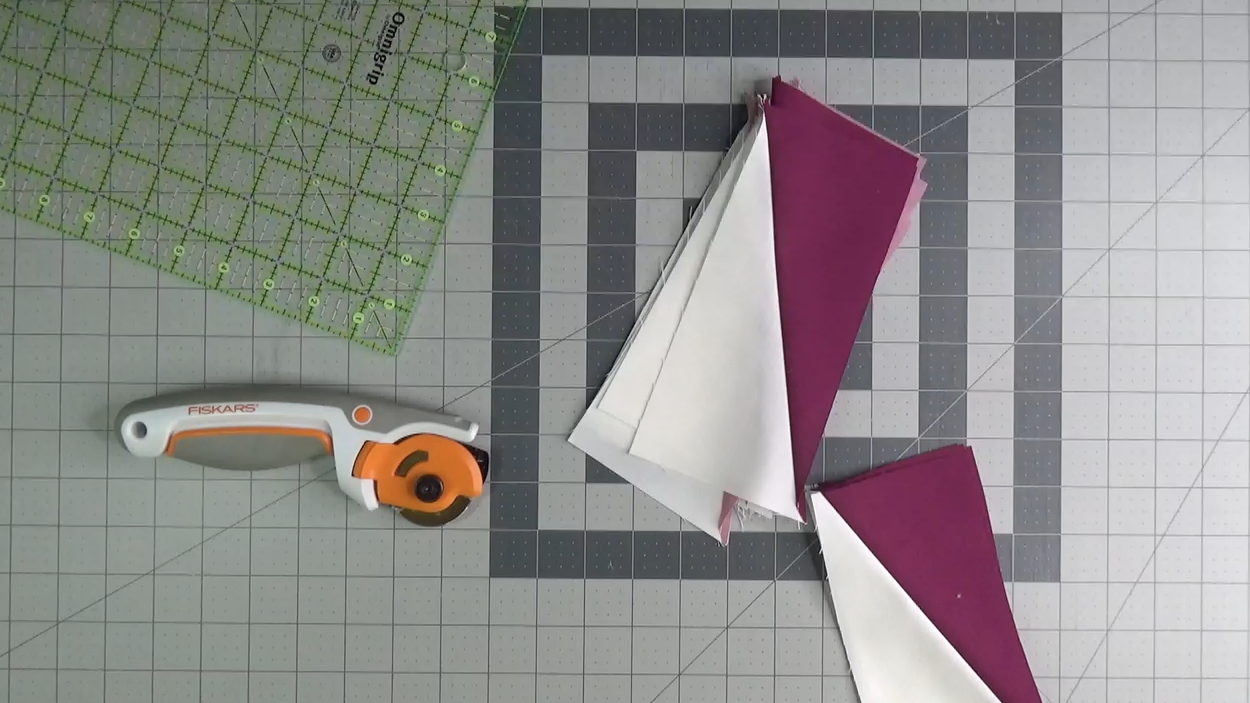
In Week 7 of the Skill Builder Quilt Along, we’re making half-rectangle triangles two at a time. If you’ve been following along, you already have the foundational skills to tackle this one. And if you’re new here, this is a wonderful technique to add to your repertoire.
Let’s take a closer look at what makes this unit so special.
What Is a Half-Rectangle Triangle?
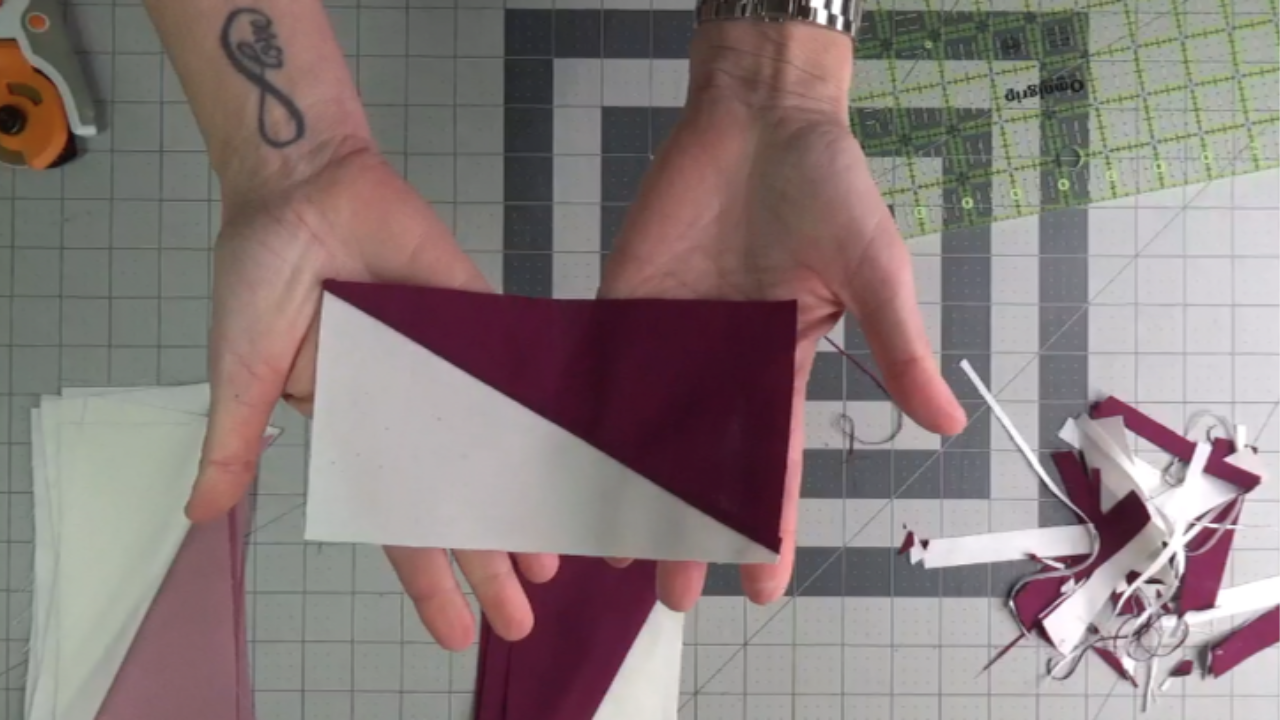
A half-rectangle triangle is a rectangle made from two triangles joined along a diagonal seam. One triangle is cut from one fabric and the other from a second fabric, and when sewn together, they create a strong diagonal line running from one corner of the rectangle to the other.
Unlike a half-square triangle, where the diagonal runs corner to corner on a square, the rectangular shape of an HRT means the diagonal has a definite direction — it leans either left or right. This is actually what makes them so interesting to work with. Depending on how you orient them, HRTs can create the illusion of motion, depth, and dimension in a quilt.
What Can You Make With Half-Rectangle Triangles?
This is where things get really fun. Half-rectangle triangles are one of those units that can completely transform the look of a quilt. Because of their directional diagonal, they create movement and flow in a way that squares and standard triangles can’t quite achieve on their own.
Some of the designs you can create with HRTs include:
- Elongated pinwheels with a sense of spin and energy
- Parallelogram patterns with a modern, geometric feel
- Arrow and chevron layouts that draw the eye across the quilt
- Optical illusion designs that appear to curve or twist
- Bold diagonal stripes with strong directional movement
Once you start recognizing half-rectangle triangles in quilt patterns, you’ll spot them everywhere, in modern quilts especially, but in traditional designs too. Learning to make them accurately is a skill that significantly expands what you’re able to create.
Tips for Beautiful Half-Rectangle Triangles
Half-rectangle triangles have a couple of quirks that are worth knowing about before you sit down to sew.
Mark your diagonal line carefully. A precise line makes a big difference with HRTs because the diagonal's direction determines the finished unit's orientation. Take a moment to mark it accurately before you sew.
Pay attention to orientation. Because HRTs come in left-leaning and right-leaning pairs, it’s easy to accidentally sew one in the wrong direction. Before assembling your block, lay all your units out and double-check that each one is facing the right way. A design wall or even a clear spot on the floor is helpful for this step.
Use a consistent scant quarter-inch seam. This matters with every quilting unit, but it’s especially important here. You’ll trim each unit after you press it, and you want to make sure a wide seam allowance doesn’t prevent you from trimming your units to the needed size.
Square up every unit before assembling. Trimming your HRTs to an exact size is what makes them fit together cleanly. Don’t skip this step. It’s the difference between blocks that almost line up and blocks that line up perfectly.
Why Half-Rectangle Triangles Are Worth Learning
Half-rectangle triangles are one of those techniques that might feel like a stretch at first. They’re slightly more complex than what you’ve done before, with a few more things to keep track of. But that’s exactly what makes them such a valuable skill to have.
Learning HRTs pushes you to apply the same core skills you’ve been practicing all along — accurate cutting, consistent seam allowances, careful pressing, squaring up — in a slightly more demanding context. And when those skills hold up under a little more pressure, you’ll know you’ve really got them.
More than that, half-rectangle triangles give you access to a whole category of quilt designs that simply aren’t possible with squares and standard triangles alone. The directional movement they create is distinctive and striking, and it’s the kind of detail that makes a quilt look complex even when the construction is straightforward.
Once you’ve made a few, you’ll start seeing the possibilities everywhere.
Want to Practice This Skill with Guidance?
Half-rectangle triangles are the kind of technique that’s so much easier to learn inside an actual project, with step-by-step guidance and a community of quilters working alongside you. That’s exactly what the Skill Builder Quilt Along is designed for.
Each week of the quilt along focuses on a different foundational quilting skill — from strip piecing to half-square triangles, flying geese, quarter-square triangles, and now half-rectangle triangles. Instead of learning techniques in isolation, you practice them while making real quilt blocks that come together into a finished quilt.
The goal isn’t just to finish a quilt. It’s to finish a quilt and walk away with a toolkit of skills you’ll use in every project you make after this one.
If you’ve been curious about joining, it’s not too late. You can find all the details on the Skill Builder QAL home page.
Because quilting is so much more fun when you’re not figuring it all out alone.